Adulting 101: How to Stick to a Budget Without Feeling Restricted
If the word “budget” makes you cringe, you’re not alone. Most people associate budgeting with cutting back, guilt, or not being able to enjoy life. But the truth is, a budget isn’t about restriction; it’s about direction. It’s the roadmap to creating the life you actually want, not just the one your bank balance allows. For this back part of 2025, I have really been questioning what I want my life to look like long term and what do I need to get there. A big piece for me right now is how quickly can I get all of my debt paid off and really focusing on being able to either retire early or move abroad. Both of those goals are requiring me to get it together and live within a budget versus just vibes which I have been doing for a very long time (too long if I’m honest).
Whether you’re paying off debt, saving for a trip, or building a financial cushion, your budget can become a tool for freedom when you learn to use it the right way. In this post, we’ll walk through how to create and stick to a budget that feels empowering, not limiting. You’ll also learn the mindset shifts that make money management easier, plus some practical systems to keep things on autopilot.
Most of us were never really taught how to handle money. We learned how to work for it, maybe even how to save it, but not how to manage it in a way that supports both security and joy. The result? We swing between being overly cautious or completely spontaneous, wondering why it’s so hard to find balance. But budgeting doesn’t have to feel like walking a financial tightrope. It can feel grounded, flexible, and empowering once you redefine what it really means.
Think of your budget as a reflection of your priorities, not your limitations. It’s less about saying “no” to the things you love and more about saying “yes” to what actually matters. When you take control of your money, you take control of your options, whether that’s taking a trip without guilt, paying off your car faster, or finally building a savings account that makes you feel safe.
And here’s the secret that most financial experts overlook: a budget that works doesn’t just help you save money. It helps you build confidence. Each time you make a decision that supports your goals, you reinforce your belief that you’re capable of managing your life with intention. Experts typically do not dive into what events or things you were around growing up that shaped your money mindset into what it is today. Diving into those uncomfortable and somewhat ugly pieces to start making moves to readjust those to more positive thoughts is what adulting is really about. Always remember your thoughts become your reality. If you need help with resetting your subconscious thoughts, check out the Multi-Millionaire Mindset Subliminal to listen while you sleep.
Over time, budgeting stops being a chore and starts feeling like self-care and almost automatic. It’s one of the most underrated acts of empowerment you can give yourself. With the right systems, mindset, and habits, you can build a money plan that fits your lifestyle and supports your goals without ever feeling deprived or boxed in.

Why Most Budgets Fail (and What to Do Differently)
Budgets fail for one big reason: they’re built around restriction, not reality. Think about to any time you were trying to hit a goal, how did it turn out when you were extremely strict saying no to everything? Probably not good, right? When you try to eliminate everything fun or cut down too fast, it feels like punishment. That “all or nothing” approach creates burnout and guilt, leading you to give up altogether.
The secret to success is balance. A healthy budget reflects your real life, your goals, habits, and quirks, while still helping you make progress. Instead of asking, “What do I need to cut?” start asking, “How can I direct my money toward what matters most?”
A good budget doesn’t feel like a cage. It feels like clarity. Something I will mention that I have noticed a major difference for me over the last year is I have been able to majorly stick to my budget and other spending habits when I am treating my ADHD. It has reigned in my impulse control and I am seeing it in a lot of areas including my finances. If this is something that you think you may be struggling with, I would definitely recommend meeting with a medical provider and see if this is something that may be in play for you to address. It may not be; but it never hurts to make sure something else isn’t at play.
Step 1: Define Your “Why” Before the Numbers
Before you even open a spreadsheet or a budgeting app, you need clarity on why you’re budgeting in the first place. Your “why” keeps you motivated when it’s tempting to swipe your card on impulse buys. For your “why”, think more than just paying off debt or having a set dollar amount in savings. Think big so big that your “why” would scare you if you had it right now.
Ask yourself:
What do I want my money to help me achieve this year?
What would financial peace look and feel like for me?
If I could wave a magic wand, what would I want my finances to look like six months from now?
Maybe your why is paying off a high-interest credit card. Maybe it’s building your first $1,000 emergency fund or saving for a move abroad. Whatever it is, write it down. Keep it visible in your planner, on your fridge, or as a phone background. You’re not saying “no” to spending; you’re saying “yes” to your bigger goals. Once you have your big “why”, put it somewhere you can see it every day, like a bathroom mirror or on your computer monitors at home. I have mine on a sticky note that I see each day in my office.

Step 2: Track What’s Actually Happening (Without Judgment)
Most people skip this step, but it’s the foundation of every effective budget. For one month, track everything you spend. You can use apps like Mint, YNAB (You Need a Budget), or a simple spreadsheet. Trust me, it is not going to be fun and you might be a bit shocked and/or shamed of what you are spending each month. I am using PocketGuard and I can see how much I am spending on certain categories each month vs. what I have set as a budget. It has been eye opening and not in a good way.
The goal isn’t to shame yourself; it’s to get honest data. You might be surprised by where your money is going. That $7 coffee you swear you only get once a week might be showing up four or five times. Or that grocery bill you thought was “reasonable” might reveal impulse snack runs adding up fast.
Once you have the data, categorize your expenses into three simple buckets:
Needs — things you must pay to live (rent, food, utilities, insurance).
Wants — things that make life enjoyable (streaming services, dining out, hobbies).
Goals — savings, debt payments, investments, or future experiences.
You might realize you are going way above what you thought you were spending on coffee or going out to eat. Seeing your habits clearly helps you make small, sustainable shifts instead of overwhelming changes. I do like when I can see it in an app where it compares multiple months and I can easily make adjustments so the next month gets better.
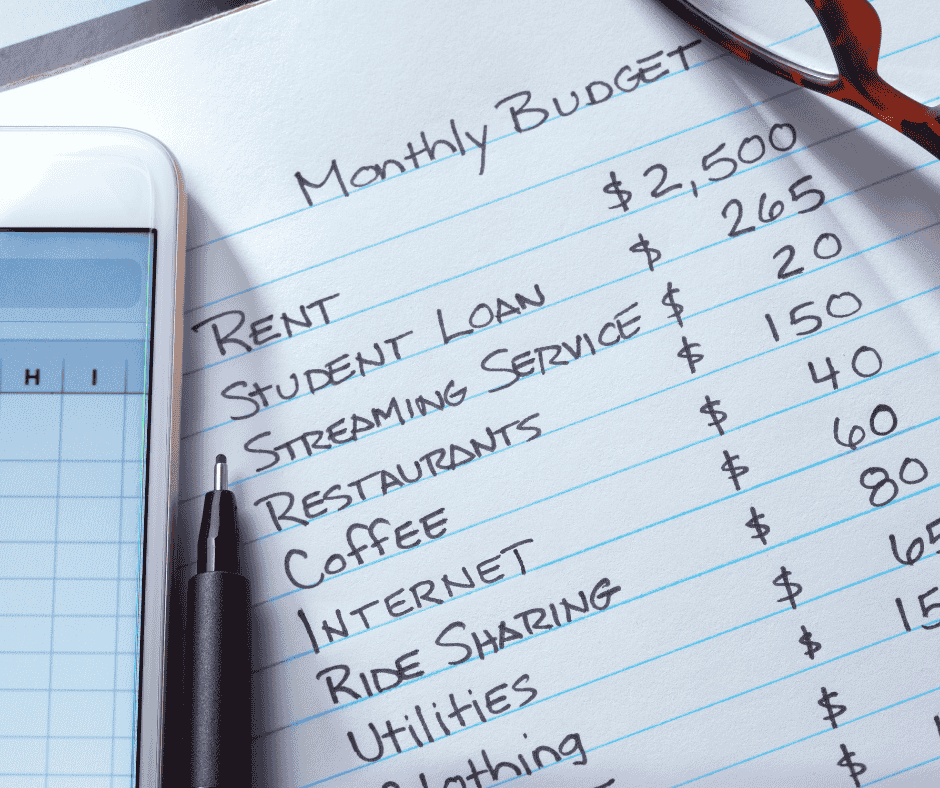
Step 3: Create a Realistic Spending Plan
Now that you know where your money is going, it’s time to build a budget that aligns with your reality.
A good rule of thumb is the 50/30/20 method:
50% of your take-home pay goes to needs
30% goes to wants
20% goes to financial goals
But this isn’t a one-size-fits-all rule. If your rent is high or you’re aggressively paying off debt, adjust it. The key is to give every dollar an assignment. By doing that, it keeps you from feeling like your money disappears into thin air. If you aren’t sure where to start if you feel overwhelmed, you can put in your paycheck amounts with monthly expenses and goals into ChatGPT and it can create a good sample of what you should be doing to reach your goals by a set time.
Try creating “mini-budgets” for areas that tend to spiral, like groceries or entertainment. Give yourself permission to spend within those limits guilt-free. For example, if you allocate $150 per month for dining out, that’s your fun money. Also, don’t forget to begin putting some money aside for the holiday season. Try to figure out what you spent last year and budget either that amount or if you are needing to cut back, begin getting creative on the type of gift you give. Maybe something that is more of an experience or have a conversation of just not giving gifts and spending time together. When the budgeted dollars are gone, it’s gone, but you get to enjoy it without guilt because it was part of the plan.
Step 4: Automate What You Can
Automation is your best friend when it comes to sticking to a budget. It removes the emotional decision-making that often derails progress. Everything that I have been learning is once you get to a point where you have your debt paid off, the next step is automating savings and investments to reach your financial goals quicker.
Set up:
Automatic transfers to savings each payday
Bill pay for rent, utilities, or subscriptions
Investment contributions directly from your paycheck or checking account
When saving and paying bills happen automatically, you’re less likely to “forget” or dip into funds meant for something else. You can even use separate accounts (one for bills, one for spending, one for savings) to simplify tracking. For me, it is really hard to separate those when everything is all together in one account.
Automation gives you the freedom to live without constantly worrying about where your money is going.

Step 5: Build a “Fun Fund” (and Actually Use It)
Here’s the truth: if your budget doesn’t include fun, it’s not sustainable. It results in us falling off the wagon and possibly getting right back to where we started which is the opposite of fun.
Many people cut out the things that make them happy, like grabbing dinner with friends, buying books, or taking a weekend trip, thinking that’s the key to success. But when you constantly deprive yourself, you’ll eventually rebel.
Instead, plan for joy. Make a list of ten things of what brings you joy.
Create a “fun fund” within your budget for anything that makes life enjoyable. This could be $50 a month for coffee shops, $100 for self-care, or $200 for travel savings. Knowing you have money set aside for fun takes away the guilt and prevents burnout.
Step 6: Make Budgeting a Weekly Ritual
Your budget isn’t a one-time setup; it’s a living, breathing system that evolves with you. Set aside a specific time each week, even just 15 minutes, to check in. The best time is usually on Sundays before the week starts to ramp up again.
Use this ritual to:
Review your current spending
Move leftover money to savings
Adjust any categories that aren’t working
Celebrate small wins
If you overspent in one category, don’t panic. Simply rebalance next week’s plan. The goal is progress, not perfection.
Turn it into a cozy ritual: light a candle, play a lo-fi playlist, pour a coffee, and make it something you look forward to. The more you normalize money check-ins, the less stress you’ll associate with them. If you have a partner, you could do this over a date night dinner either at home or out at a restaurant. If you are solo, you can do the same thing and just review the numbers.

Step 7: Identify Your Financial Triggers
We all have spending triggers, whether emotional, situational, or social. Maybe you shop online when you’re bored or grab takeout when you’re tired. Learning to identify these moments helps you create better coping strategies. For me, when my day to day work gets way too busy, I fall back into the going out to eat habit or having food delivered versus cooking at home (when we have a fridge full of food).
Ask yourself:
What mood or situation leads me to spend impulsively?
How can I meet that need without spending money?
If boredom triggers you, try going for a walk, journaling, or diving into a creative hobby instead. If you tend to overspend when you’re out with friends, use cash envelopes or prepaid cards for spending limits. If exhaustion during the work week is what does you dirty, plan some super easy freezer meals to just heat up versus trying to figure out what to make, getting overwhelmed and then ordering something.
Awareness is what transforms reactive habits into intentional choices. Setting up some alternative habits ahead of time will help you stick to your plan.
Step 8: Use Tools That Fit Your Personality
There are endless budgeting tools, but the best one is the one you’ll actually use. If you’re a visual person, try Notion templates or Google Sheets dashboards that let you color-code your progress. If you love automation, apps like YNAB, Rocket Money, or PocketGuard are great.
Prefer something tactile? Use The Rooted CEO Budget Planner that you can customize or printable envelopes to track cash flow. I review my budget each month to see if there are any extras I need to plug in on certain paychecks like pay for dog boarding while I travel or my annual HOA fee.
The point isn’t to make your system perfect; it’s to make it feel personal. Yes, you can do this all in a spreadsheet; but you can also make it fun. When your tools fit your personality, consistency becomes effortless. I have an Erin Condren planner that I use fun stickers or wasabi tape to give it some of my colorful character for the big monthly plan; but pair it with Pocketguard for weekly reviews.
Step 9: Reward Your Progress
Budgeting is easier when you celebrate along the way. Every milestone, whether it’s paying off a credit card, saving $500, or simply sticking to your plan for a month, deserves recognition. Think for yourself - what makes me feel really good once I hit a goal? Some people like big rewards like travel or a luxury item, others like smaller treats that can happen more frequently. Figure out what is best for you.
You could reward yourself by:
Taking a day trip with your “fun fund”
Buying something small you’ve had on your wish list
Having a cozy night in with your favorite meal
Positive reinforcement builds motivation. The more you associate budgeting with good feelings, the easier it becomes to sustain long term.

Step 10: Redefine What “Rich” Means to You
One reason people feel restricted by budgets is that they’re chasing someone else’s definition of wealth. Social media sells a version of “rich” that’s all designer bags and luxury cars, but true abundance looks different for everyone.
Being rich might mean:
Having freedom to take a spontaneous trip
Owning a cozy home that feels like your sanctuary
Working less so you can spend more time with your kids
Knowing your bills are paid without anxiety
If you feel like you just aren’t doing enough, you may need to audit either who you are following on social media or who you are around on a daily basis. You can also share with your friends and family what your goals are and start having that be a focus on conversation. You may find out they are doing the same thing and you can be accountability partners depending on your comfort level. Your budget is simply the bridge between your current life and the one you’re creating. When you align your spending with your definition of “rich,” budgeting stops feeling like sacrifice and starts feeling like self-respect.
Mindset Shifts That Make Budgeting Feel Easy
If you’ve ever told yourself “I’m just bad with money,” it’s time to rewrite that story. Remember how I mentioned that the thoughts behind the scenes are something that needs to be addressed? This will be an important piece to focus on while you are going through this journey. Budgeting isn’t a personality trait; it’s a skill anyone can learn.
Here are a few mindset shifts to adopt:
Replace guilt with curiosity. Instead of saying, “I messed up,” ask, “What can I learn from this?”
Focus on progress over perfection. A 70% win is still a win.
View your budget as a mirror. It’s not judging you; it’s showing you what’s possible.
Remember that restriction is temporary. Discipline now creates freedom later.
Money is emotional, but clarity brings peace. Is how you are spending money replacing something else that is missing from your life? If you can identify that, start brainstorming ways to help fill that to heal that money wound. The more honest you are with yourself, the more empowered you’ll feel to make changes that last.
Bonus: The Anti-Restriction Spending Trick
Here’s one of the most effective budgeting hacks for feeling free: the Conscious Choice Rule.
Whenever you’re about to spend money, ask:
Does this purchase align with my goals?
Will it add value or just fill a void?
Am I okay trading this for what it costs me in time or peace?
If the answer is yes, buy it guilt-free. Don’t question it or regret your purchase. You’re not failing your budget; you’re honoring your values. If the answer is no, redirect that money to something that lights you up later.
This simple pause helps you spend intentionally instead of reactively.
Final Thoughts
A budget doesn’t limit your life; it unlocks it. When you create a plan that reflects your values and lifestyle, every purchase becomes a conscious choice. You start to see that money isn’t about deprivation; it’s about direction, clarity, and empowerment.
The more consistent you become, the more freedom you’ll feel. You won’t wonder where your paycheck went, because you’ll know exactly what it’s doing for you. You’ll make decisions with confidence instead of stress, and over time, those small intentional choices will add up to big life changes.
Budgeting is not about being perfect; it’s about being aware. The best budget is the one you can stick to long enough to see results. Start where you are, give yourself grace, and keep going. The peace that comes from knowing your money has a plan is one of the most freeing feelings in the world.
When you stop viewing your budget as a punishment and start seeing it as a lifestyle partner, everything changes. You begin to realize that money is just energy. It flows best when it has purpose and boundaries, the same way your time and attention do. If you want more abundance, you have to show the universe that you can handle what you already have with care and confidence.
Every time you choose to cook at home, transfer money to savings, or say no to something that doesn’t align with your goals, you are building self-trust. You are proving to yourself that you are capable of creating a stable, abundant, and intentional life. That’s where true wealth begins, not in the size of your paycheck, but in how you direct it.
There will be months that go perfectly and others that don’t. The goal isn’t to never overspend; it’s to stay self-aware enough to adjust quickly. Each setback simply teaches you something new about your habits and priorities. Progress happens through consistency, not perfection.
As you continue refining your system, celebrate how far you’ve come. The fact that you are learning to manage your money with purpose already puts you ahead of the curve. Budgeting doesn’t have to feel like deprivation or stress. It can feel like clarity, choice, and self-respect.
So, pour your favorite drink, open your planner, and take a deep breath. You’ve got this. Building a budget you can actually live with is one of the most empowering parts of adulting. It’s not about restriction; it’s about alignment. And once your money begins working for you instead of against you, you’ll never want to go back.
If you need a sample budgeting format planner page, check out The Rooted CEO Budget Planner and I hope it helps you on your journey of meeting your financial goals.