How to Create a Tiny Sanctuary When Your Life Feels Like It Belongs to Everyone Else
Reclaiming physical space as emotional practice, for the woman who has been last on her own list for too long.
Affiliate disclosure: This post contains affiliate links. If you purchase through one of my links, I may earn a small commission at no extra cost to you.
There is a particular kind of exhaustion that comes from living in spaces that do not feel like yours.
Maybe you share a home with children who need something from every room. Maybe you are in a transitional living situation, recently separated, newly single, or somewhere between who you were and who you are becoming. Maybe you have a house full of furniture you chose with someone else, and none of it feels right anymore.
Your environment is not neutral. It speaks to your nervous system constantly, signaling whether you are safe, whether you belong, whether anything in this space is just for you.
A tiny sanctuary is not a design project. It is a message to yourself that you are still here, and that you deserve to take up some space.
Why Your Physical Environment Affects Emotional Recovery
When you are in the middle of rebuilding your life, whether after a divorce, a burnout, or a long season of over-giving, your environment becomes one of the few things you have direct control over.
You cannot control how the legal process unfolds. You cannot speed up grief or make a life transition feel less disorienting. You cannot make yourself feel like yourself again by sheer force of will.
But you can choose a chair. You can clear a corner. You can place one object in one room that belongs entirely to you.
The nervous system responds to physical input. Safety is not just a feeling. It is something your body reads from sensory information: temperature, softness, light, smell. When your environment includes spaces and objects that feel chosen and personal, your body registers that as evidence of safety. And safety is what allows reconnection to begin.
You do not need a dream home to deserve a space that feels like yours. You need one corner, chosen intentionally.
The 5-Step Tiny Sanctuary Method
These steps work even if you are in a small apartment, a shared home, or a transitional living situation. You do not need extra square footage. You need one intentional decision, made five times.
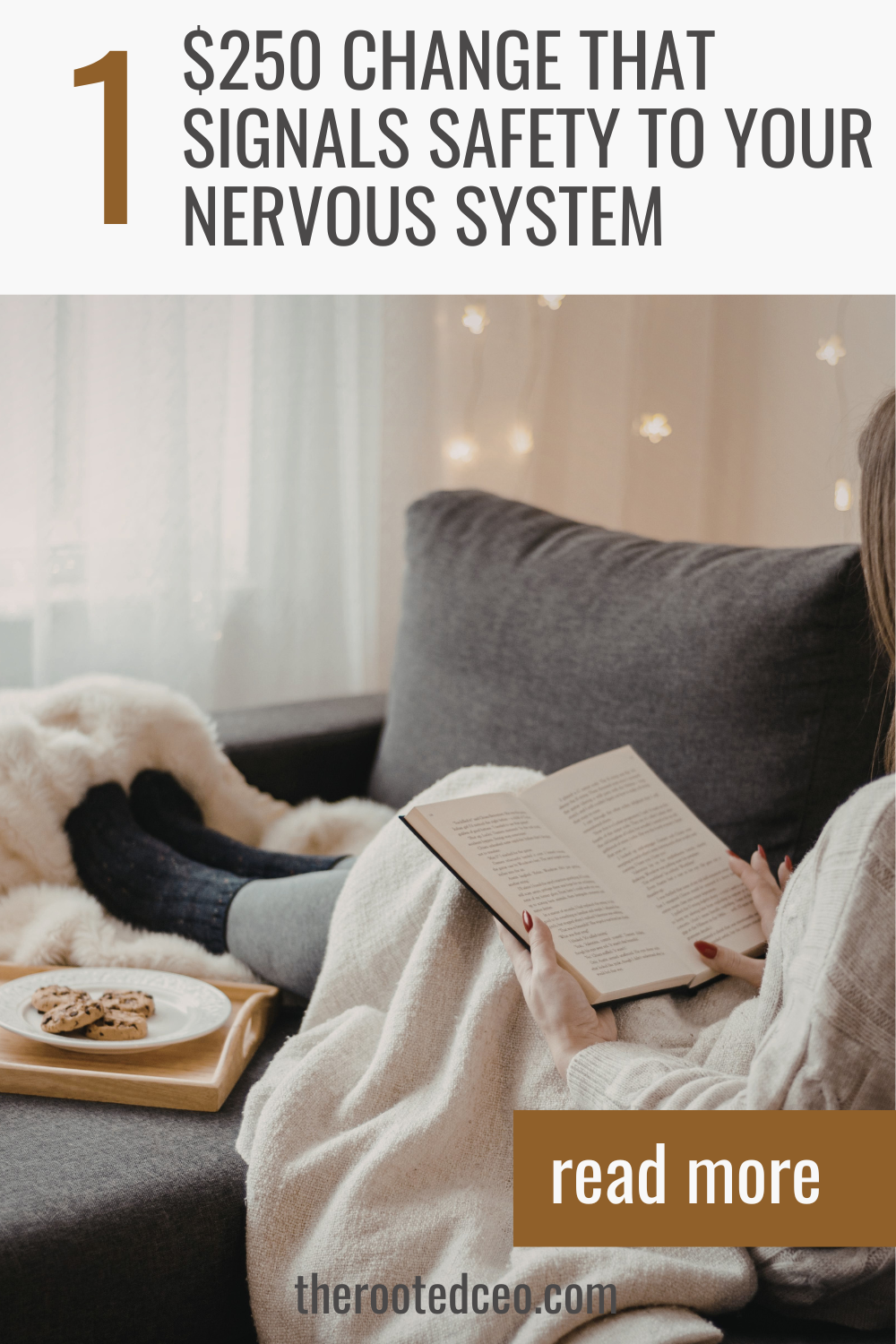
Step 1: Choose a single chair
Start here before you do anything else. A chair that is yours, not the couch where everyone watches TV, not the kitchen table where you manage logistics. Something separate.
It does not have to be expensive. It has to be comfortable enough that sitting in it feels like an exhale. Put it near a window, in a corner of your bedroom, or anywhere that is not a shared hub of household activity. A reading chair can anchor an entire corner for under $250.
The chair communicates something to your nervous system every time you sit down: this one is mine.
Step 2: Add warm light before anything else
Lighting is one of the fastest and most affordable ways to change how a space feels. Overhead lighting reads as clinical. Warm, low light reads as safe.
A small lamp or a set of soft string lights can shift the entire emotional register of a corner. Your body responds to warm light the way it responds to late afternoon sun. It signals that the day is winding down and you are allowed to stop. This is not a decorating preference. It is a nervous system input.
A simple plug-in floor lamp or a warm-toned table lamp runs $25 to $60 and does more for your sense of safety than most people expect.
Step 3: Place one object that exists for no practical reason
Not something useful. Not something shared. Something entirely yours because you like it, because it holds a good memory, because it makes you feel something when you look at it.
A book. A small plant. A mug you never use for anything but sitting in your chair. A piece of art that cost ten dollars and makes you feel like yourself.
The object itself is not the point. The choosing is. The act of selecting something for your own pleasure and placing it somewhere you will see it is a small but concrete declaration: I still have preferences. I still get to have things that are only for me.
Step 4: Name the space, even only in your own mind
This step sounds minor. It is not. Calling a corner of your bedroom your reading nook or referring to a chair as your thinking chair anchors the space in your nervous system. It makes it real. It gives you something to return to.
When the rest of your life feels formless and in motion, a named space becomes a reference point. You know where to go when you need to regulate, decompress, or simply be still for five minutes without someone needing something from you.
Step 5: Protect it from becoming functional
This is the step most women skip, and it is the most important one.
The fastest way to lose a tiny sanctuary is to let it become useful. The reading chair becomes the place where you answer emails. The corner becomes overflow storage. The morning ritual space becomes the spot where you track school schedules and manage calendars.
If you have spent years making everything in your life functional and nothing precious, protecting a small space from utility is an act of resistance against that pattern. It requires actively deciding that some space in your life exists only for how it makes you feel.
That decision is harder than it sounds. It is also one of the first signs that the over-functioning pattern is beginning to loosen.
3 Signs You Need a Tiny Sanctuary Right Now
You might be overdue for this practice if any of these feel familiar:
You cannot name a single physical space in your home that feels entirely yours.
You instinctively make yourself comfortable last, even in your own house.
You feel vaguely restless at home but cannot explain why, even when things are quiet.
These are not character flaws. They are patterns that develop when you have been running on obligation for a long time. A tiny sanctuary is not a cure. It is a starting point.
This Is Not About Aesthetics
Creating a tiny sanctuary is not about having a Pinterest-worthy nook or a carefully curated shelf. It is about giving yourself physical evidence that you are still someone who deserves comfort.
That evidence matters more than most people acknowledge. When you have been in a season of giving everything to work, to children, to a dissolving relationship, or to the logistics of surviving a major life transition, your body forgets what it feels like to receive something.
The tiny sanctuary is practice. It is how you begin teaching your nervous system that receiving is allowed. That softness is available. That not everything has to be earned before you get to have it.
One corner. One chair. One thing that is yours.
Start there.
This post contains affiliate links. If you purchase through one of my links, I may earn a small commission at no extra cost to you. I only recommend products I genuinely stand behind.