I Walked Into a Room Full of Mirrors and Felt Nothing. Until I Did.
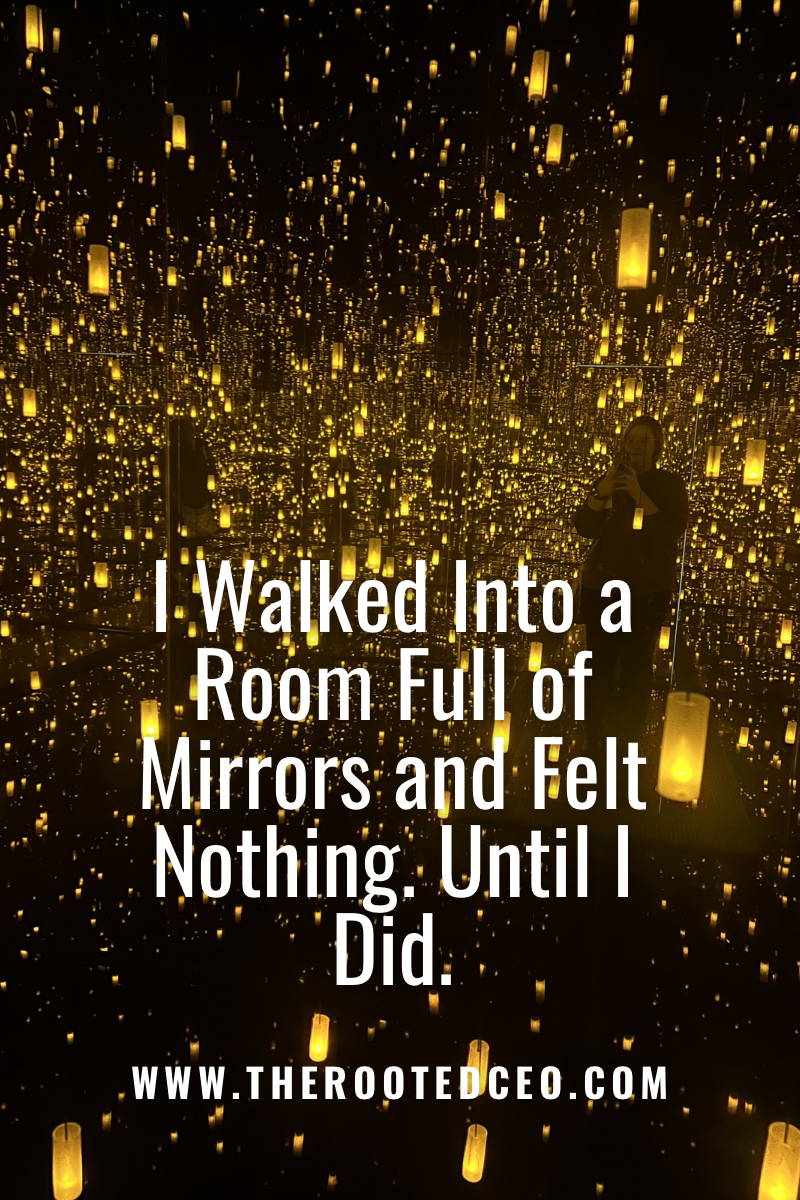
There's a particular kind of art installation that's designed to make you feel something. Infinite mirrors, fractured light, your reflection multiplied until it dissolves into geometry. I stood inside one recently, phone in hand, filming a reel. And I waited.
I waited for wonder. For that chest-opening awe that art is supposed to produce. For the feeling of being small and infinite at once.
It didn't come.
I adjusted my angle. Moved closer to the glass. Filmed anyway. Smiled at the camera. Posted it. Got back in the car and drove home and felt exactly as flat as I had when I arrived.
This post contains affiliate links. If you purchase through a link on this page, I may earn a small commission at no additional cost to you. I only recommend products I genuinely use or believe would support the work described here.
What Emotional Flatness Actually Is (And Why High Achievers Are Most at Risk)
Emotional flatness is not depression, though they can coexist. It's not ingratitude. It's not being cold or broken or spiritually deficient.
It is, in the most clinical sense, what happens when a nervous system that has been running on high alert for too long simply stops producing the emotional signal. Your body downregulates sensation the same way it downregulates cortisol. Not as a punishment. As a protection.
If you are not sure whether this is what you are experiencing, here are five signs your nervous system has gone into protective flatness:
Beauty stops landing. You can recognize that something is beautiful without feeling anything about it. Art, nature, music. You see it. You do not feel it.
You are productive but not present. You are executing at a high level but feel like you are watching yourself from a slight distance. Competent but not connected.
Small pleasures stop registering. Things that used to feel like a treat, a good meal, a hot bath, a quiet morning, feel neutral. Fine. Unremarkable.
You notice you are not looking forward to anything. Not because life is bad. Because the anticipation mechanism has gone quiet.
You perform emotion more than you feel it. You know what the appropriate response is and you produce it. But it is coming from your head, not your body.
High-achieving women are disproportionately susceptible to this because the same cognitive wiring that makes you excellent at executing, problem-solving, and holding everything together is the exact wiring that learns to route around feeling in order to function. You don't stop being emotional. You become efficient at bypassing it.
The result is a version of yourself that can walk into a room full of mirrors, surrounded by beauty specifically engineered to produce wonder, and feel nothing but the mild pressure to capture content.
This is not a character flaw. It is the logical output of a system that has been optimized for survival at the expense of presence.
If you're someone who wants support for the day-to-day of rebuilding that presence, a structured planner can help you create the small containers of time and intention that nervous system recovery actually requires. The Erin Condren LifePlanner is one I'd recommend for that kind of intentional scaffolding.
The Leo Moon Dimension: When Your Emotional Nature Goes Into Hiding
If you're someone who finds astrology useful as a psychological mirror rather than a prediction system, this framing may land for you.
The Leo Moon in a natal chart, or a Leo Moon transit moving through the sky, carries a specific energetic signature. Leo is the sign most associated with self-expression, radiance, visibility, and the desire to be witnessed. A Leo Moon is not vanity. It is a genuine, deep need to feel alive through creative expression and authentic recognition.
When a Leo Moon is fed, it feels like joy in your own skin. When it is starved, it goes flat. Not dramatically. Not with fanfare. It simply turns the lights down and stops looking for the stage because the stage has stopped feeling safe.
For women who were taught early that their aliveness was "too much," that their need for recognition was selfish or performative, a Leo Moon learns to suppress the very impulse that would restore it. You stop reaching for the experience that would light you back up because somewhere in your nervous system, wanting that felt dangerous.
Standing in the mirror room, I understood this intellectually. Somewhere between the fortieth reflection of my own face and the two hundredth, I recognized that I had stopped expecting beauty to reach me. I had made myself translation-proof to wonder.
Honestly, it made me extremely sad and on the drive home from the art museum. I cried, not the graceful one lone tear down my cheek. I ugly cried my heart out while driving on I-10 wondering when did it change and asking what do I need to do to feel the spark and excitement in my bones. Fun fact - when you ask the Universe for something, you better be ready for the response or the storm that will shape you quickly, which is where I am currently navigating at.
Burnout and Numbness in Women: The Spiritual Signal You're Missing
There is a concept in Jungian and archetypal psychology sometimes called the descent. It appears in mythology as the journey downward before the return, the winter before the thaw, the moment the heroine disappears before she is restored.
This is not a metaphor for depression. It is a description of a specific phase in a woman's psychological and spiritual development where the old identity, the one built from performance and protection and achievement, has to come apart before something truer can form.
Emotional flatness, from this lens, is not a malfunction. It is a signal. The self that was doing all the performing has run out of material. The coping strategies that kept you functional have reached their ceiling. And the soul, if you want to use that word, is asking you to stop performing long enough to feel what's actually underneath.
The mirror room was apt for this. Mirrors are not windows. They don't show you somewhere else. They show you yourself, multiplied, until the surface stops being interesting and you have to either look away or go deeper.
I had been looking away for a very long time. Not directly and at anything else besides the me standing in front of me.
The Archetype Underneath the Archetype
For most of my life I would have told you I was the Heroine. High-functioning, goal-oriented, built for the challenge. I show up that way. I move through the world that way. The Heroine archetype is organized around the quest: identify the obstacle, develop the capability, overcome it, grow. It is an incredibly useful identity for a woman who needs to get things done.
But when I sat with the mirror room experience long enough to actually examine it, I found something different underneath. Not the Heroine. The Lover.
The Lover archetype is not about romance. It is about the capacity for deep feeling, for connection to beauty, for being moved by the world. The Lover is the part of you that needs experience to land fully, that feels most alive in moments of genuine presence, that withers quietly when life becomes purely transactional. Where the Heroine asks what needs to be done, the Lover asks what this actually feels like.
The Lover had been running on fumes for years while the Heroine handled everything. And the flatness I felt in that mirror room was not a nervous system malfunction. It was the Lover, finally out of resources, sitting down in the middle of the floor and refusing to perform wonder she no longer had access to.
I had a suspicion that I may have a different archetype before I could name any of this. I was sharing something real with someone, something I hadn't said out loud before, and I noticed his eyes soften. Not a dramatic moment. Just that quiet shift in someone's face when they are actually receiving you. And something in my chest recognized it before my brain did. I had not noticed that in a long time. I had not let myself be in a moment long enough to notice it.
That was the Lover, stirring. Reminding me that she notices things. That she has always noticed things. That being seen, really seen, is not vanity or neediness. It is what she is made for.
That realization changed what the return needed to look like.
What Brought the Feeling Back: 5 Things That Actually Worked
The return is not a breakthrough moment. That is the lie the wellness industry tells, and it is worth naming clearly. There was no single mirror that cracked open my chest. There was instead a slow accumulation of small decisions to stop bypassing the signal.
Here is what actually worked, not as a prescription, but as a record.
1. I stopped filling the silence. Podcasts, music, background noise: these are not inherently harmful, but for a nervous system that has learned to use stimulation as a buffer against feeling, they become a wall. I started driving in silence. Eating without a screen. Sitting in rooms without filling them. The discomfort of that silence was the first feeling I had felt in weeks.
2. I made one creative request with no audience. Not content. Not a reel. Not something with a caption. I took a walk and took photos of things I found beautiful with no intention of posting them. The act of noticing beauty for myself, without converting it to output, began to thaw something.
3. I named what I actually wanted out loud. Not what I was working toward. Not a goal. A want. Something immediate and sensory and possibly irrational. This is a direct nervous system regulation technique. Desire, even small desire, is a form of aliveness. If you can name what you want, your body starts to believe you're safe enough to want things.
4. I reduced the cognitive load. Some of the flatness was, honestly, exhaustion masquerading as numbness. I was carrying too many open loops. Getting my finances into a single clear view with PocketGuard removed one of the background hums that was draining my nervous system bandwidth. Less ambient stress meant more capacity for sensation.
5. I let myself be witnessed without performing. This is the hardest one. I told someone how I actually felt, not a polished version, not a version with a lesson attached. Just: I feel nothing and I don't know why along with I do feel deeply, just I’ve kept it under wraps for such a long time that it has begun to bubble out. The response didn't need to be perfect for the act of saying it out loud to begin to shift something.
These are not cures. They are invitations. And the nervous system, when it has been in protective shutdown for a long time, responds to invitations better than commands.
The Lover's Playlist
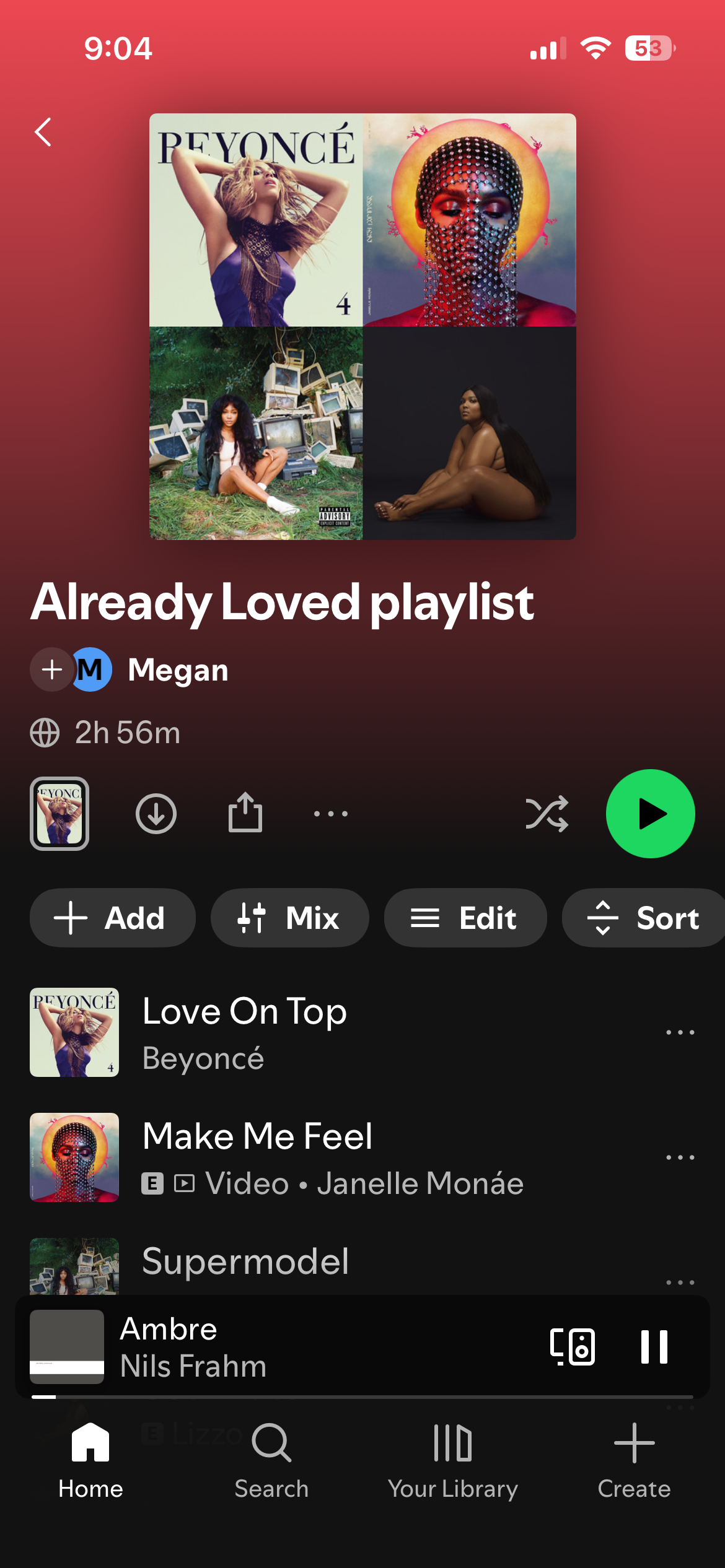
One of the first things I did after recognizing myself in the Lover archetype was make a playlist.
Not a hype playlist. Not something designed to make me productive or push through a hard morning. This was something different. I wanted music that would help me drop into my body, feel the room I was sitting in, and remember what it felt like to be a woman who was moved by things.
I built it slowly, the way you would tend something fragile. Songs that felt like candlelight. Songs that felt like being held. Songs that made the air in the room change when they came on. No agenda, no optimization. Just sound chosen entirely for how it made me feel.
I still return to it when I notice myself going flat. When I catch myself moving through the day on autopilot, checking boxes, performing competence. I put it on and I let it do what it was made to do.
If you want to listen, you can find it here: Already Loved Playlist on Spotify
And if it doesn't resonate, that's useful information too. What would your version sound like? That question alone is worth sitting with.
The Heroine Who Came Back: A Reframe for Spiritual Disconnection
There is a version of the descent story that ends with the heroine restored to exactly who she was. That is not this story.
The woman who comes back from the mirror room is not the one who walked in. She is not more sparkly or more healed or more visibly transformed. She is, in some ways, quieter. She has stopped requiring the feeling to arrive on demand. She has started trusting that it will come when she is not performing for it.
Emotional flatness in high-achieving women is one of the least discussed costs of building a life that looks impressive from the outside. You can be succeeding by every metric available and be standing in the most beautiful room you've ever seen, feeling absolutely nothing.
That is not who you are. That is what you built to survive.
The mirrors did eventually give me something. Not wonder, not right away. But recognition. I looked at my face, multiplied forty times, and I thought: she has been working very hard for a very long time, she’s tired and she hasn’t felt lit up in years. And I felt, for the first time in a while, something that was not nothing.
That was enough to start.
If you're in a season of rebuilding and you want a practical structure to support it, I keep a list of nervous system and recovery resources on Amazon that includes books, planners, and tools I've found genuinely useful. You don't need all of them. But having the right scaffolding when you're coming back online matters.
Megan Ellis is the founder of The Rooted CEO, a space for high-achieving women navigating burnout, emotional recovery, and the life they actually want to be living.