5 Books I Read in April Ranked by What They Did for My Nervous System
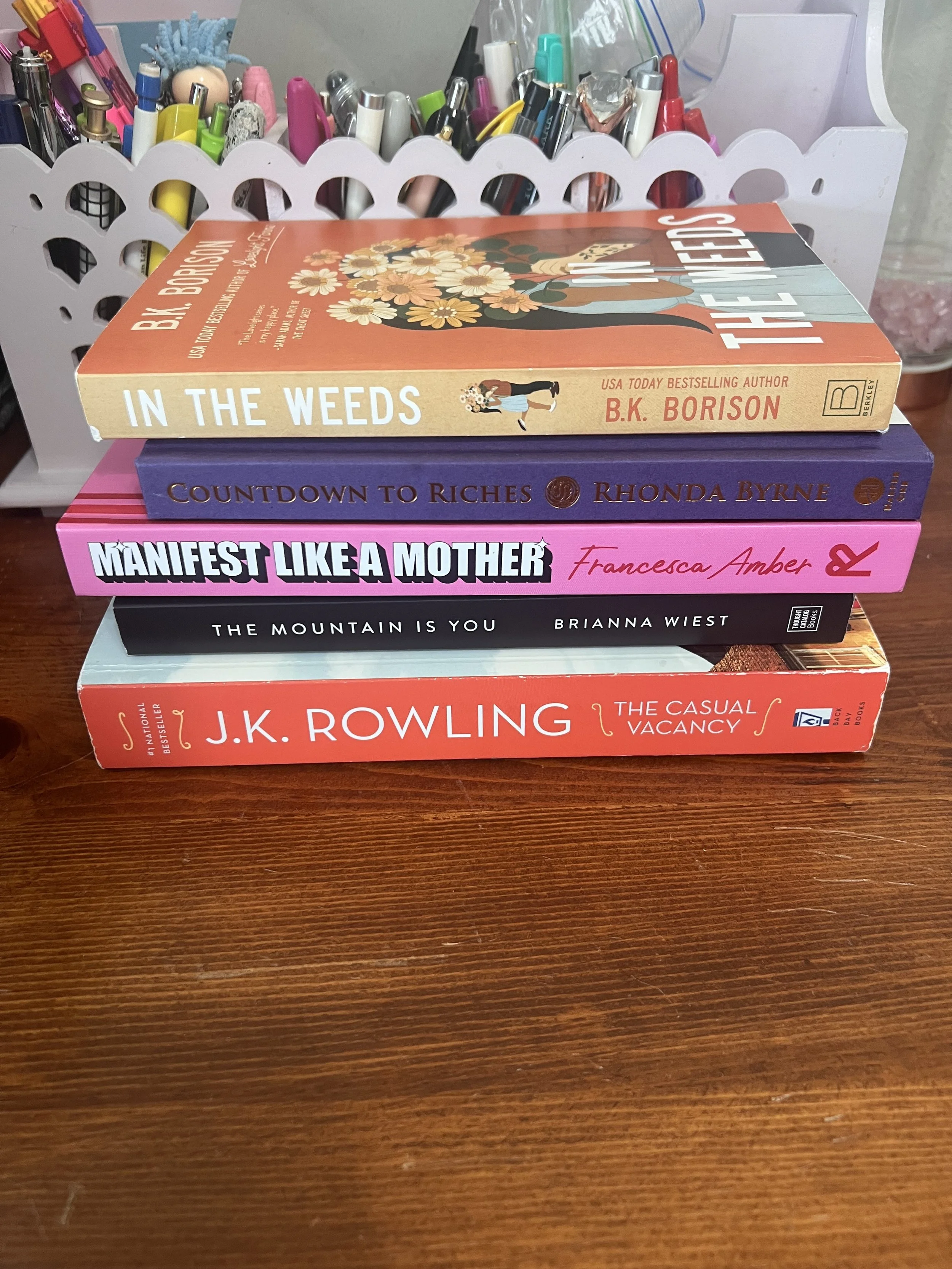
Not every book I read in April was chosen intentionally. Some were recommendations, some were impulse picks, and one was a mistake I finished out of sheer stubbornness. But when I looked back at the stack at the end of the month, what stood out wasn't whether each book was well-written or well-reviewed. It was what each one actually did to my body and my brain while I was reading it.
So that's how I'm ranking them. Not by literary merit. Not by how popular they are. By what they gave my nervous system.
This post contains affiliate links. If you purchase through a link on this page, I may earn a small commission at no additional cost to you. I only recommend products I genuinely use or believe would support the work described here.
How I'm Defining the Ranking
Before I get into the list, here's the framework I'm using. Each book gets scored on three things:
Regulation: Did it bring my nervous system down or push it further into activation?
Language: Did it give me words for something I was already experiencing but couldn't name?
Return rate: Did I want to pick it back up, or did I have to talk myself into continuing?
The ranking goes from most to least nervous system supportive. Number one gave me the most. Number five cost me the most.
1. The Mountain Is You by Brianna Wiest
Regulation: High. Language: High. Return rate: High.
This is the book I recommend most often to women who are high-functioning and quietly stuck. Wiest writes about self-sabotage not as a character flaw but as a nervous system pattern, a coping mechanism that once protected you and now just keeps you small.
What made it land for me wasn't the concept itself. It was the specificity. This book doesn't talk about self-sabotage in abstract terms. It talks about the exact loop where you can see the better choice clearly and still don't make it, and it offers a framework for understanding why that happens without making you feel broken for being in it.
I reread paragraphs frequently, not because they were unclear but because I needed a moment before I could keep going. That's the sign of a book that's doing real work.
If you're in a rebuilding phase and you want something that meets you at your actual intelligence level, start here. Get it on Amazon: The Mountain Is You
2. In the Weeds by B.K. Borison
Regulation: High. Language: Low (and that's the point). Return rate: Very high.
This is the only fiction on the list and it ranked second not despite being a romance novel but because of it.
Here's what I want to say about fiction as nervous system regulation, because I think we undervalue it significantly. Reading something that has no agenda, that asks nothing of you except to follow the story, is a genuine form of rest. Your brain gets to be inside a narrative without being the subject of it. That is not a small thing when you spend most of your waking hours being the subject of your own very demanding inner monologue.
In the Weeds is warm and funny and completely uncomplicated in the best way. B.K. Borison writes characters that feel like actual people and the pacing is easy without feeling slow.
If you're in a high-output season and you feel guilty reading fiction, I want to be direct with you: rest is not a reward. It's part of the infrastructure. Get it on Amazon: In the Weeds
3. Manifest Like a Mother by Francesca Amber
Regulation: Neutral. Language: Moderate. Return rate: Moderate.
I picked this one up skeptically. Manifestation content often sits in a register that doesn't work for me. Too much vibes, not enough mechanics. But Francesca Amber writes specifically for mothers, which immediately changes the framing. She's not writing from a place of unlimited time and quiet mornings. She's writing from the chaos, which felt more honest than most books in this space.
The sections that landed for me were about identity and what you're actually signaling to yourself through your daily decisions. That framing is behaviorally grounded in a way I could work with. The sections that didn't land leaned into law of attraction language without connecting it to anything somatic or practical.
For my nervous system specifically, this book was neutral. It didn't regulate me and it didn't activate me. It made me think, which on a high-stress month is its own kind of value.
If you're a mother who's curious about manifestation but needs it framed practically, this is a reasonable starting point. Get it on Amazon: Manifest Like a Mother
4. Countdown to Riches by Rhonda Byrne
Regulation: Mixed. Language: Low. Return rate: Low to moderate.
Rhonda Byrne is the author of The Secret, which tells you something about the framework going in. This book is structured around daily practices and mindset shifts around wealth and abundance. Some of it works. The emphasis on feeling states rather than just thought patterns is more grounded than it might initially appear.
What I noticed while reading it was that the parts that made me uncomfortable were often worth sitting with. Whether that discomfort was genuine resistance to a pattern I needed to look at, or just disagreement with the premise, I couldn't always tell in the moment. That ambiguity is worth naming, because it means your experience of this book will depend heavily on where you are in your relationship with money.
For my nervous system, this one created friction. Not the bad kind necessarily, but the kind that costs something. If you're already in a depleted state, that matters. Pair it with something grounding if you decide to read it. Get it on Amazon: Countdown to Riches
5. The Casual Vacancy by J.K. Rowling
Regulation: Low. Language: Low. Return rate: Very low.
I want to be fair here. The Casual Vacancy is technically well-written. Rowling knows how to construct a sentence and she knows how to build a world. The problem is that this particular world is relentlessly bleak in a way that didn't feel purposeful to me. It wasn't suffering that built toward something. It was suffering as atmosphere, and four hundred pages of that has a cost.
I finished it because I am the kind of person who finishes books. I do not recommend finishing it if you're not.
For nervous system impact, this book was the most expensive thing I read all month. It didn't regulate, it didn't offer useful language, and I had to actively talk myself into picking it back up every single time. If you're in any kind of rebuilding phase, this is not the book for right now. Save it for a season when you have full reserves, and even then go in knowing what you're signing up for. Get it on Amazon: The Casual Vacancy
What the Ranking Actually Showed Me
Looking at these five books through a nervous system lens taught me something I hadn't expected. The books that supported me most weren't always the ones I would have predicted. A romance novel ranked above two personal development books. The most technically accomplished book on the list cost me the most.
What you read matters, but so does when you read it and what state you're already in when you pick it up. A book that would regulate you in a stable season might activate you in a depleted one.
If you're building a reading practice that supports your nervous system rather than just adding to your achievement list, here's what I'd take from April's stack:
Lead with something that gives you language for what you're already experiencing.
Protect space for fiction without guilt. It is not a lesser category of reading.
Save the friction books for when you have something to spare.
If a book is costing you more than it's giving you, you are allowed to put it down.
Reading is not homework. April reminded me of that.
This post contains affiliate links. If you purchase through a link on this page, I may earn a small commission at no additional cost to you. Products linked include The Mountain Is You, In the Weeds, Manifest Like a Mother, Countdown to Riches, and The Casual Vacancy.