7 Books, 1 Real Shift: My June 2026 Reading Month, Ranked
If you read the way most high-achieving women read, you probably have a system. You pick books based on recommendations, bestseller lists, or whatever your feed decided you needed this month. You typically start most of them. You finish fewer than you'd like to admit. And by the end of the month, you have a stack that looks impressive and a memory of maybe one thing that actually landed.
That was how the books I ended up reading in June 2026 landed for me, or at least it was for the version of this reading month I'm describing here. I am working through reading more of my TBR (to be read) pile and some have been great while others were meh. Seven books. One genuine shift. Six that passed the time without asking anything real of me.
This isn't a post about which books were "good." Most of these were competently written. Some were genuinely entertaining. That's not the same as a book doing something for you. If you're analytical by nature, you already know the difference between content that occupies your attention and content that changes how you think. This post is about learning to tell the two apart before you've sunk another ten hours into the wrong one.
This post contains affiliate links. If you purchase through a link on this page, I may earn a small commission at no additional cost to you. I only recommend products I genuinely use or believe would support the work described here.
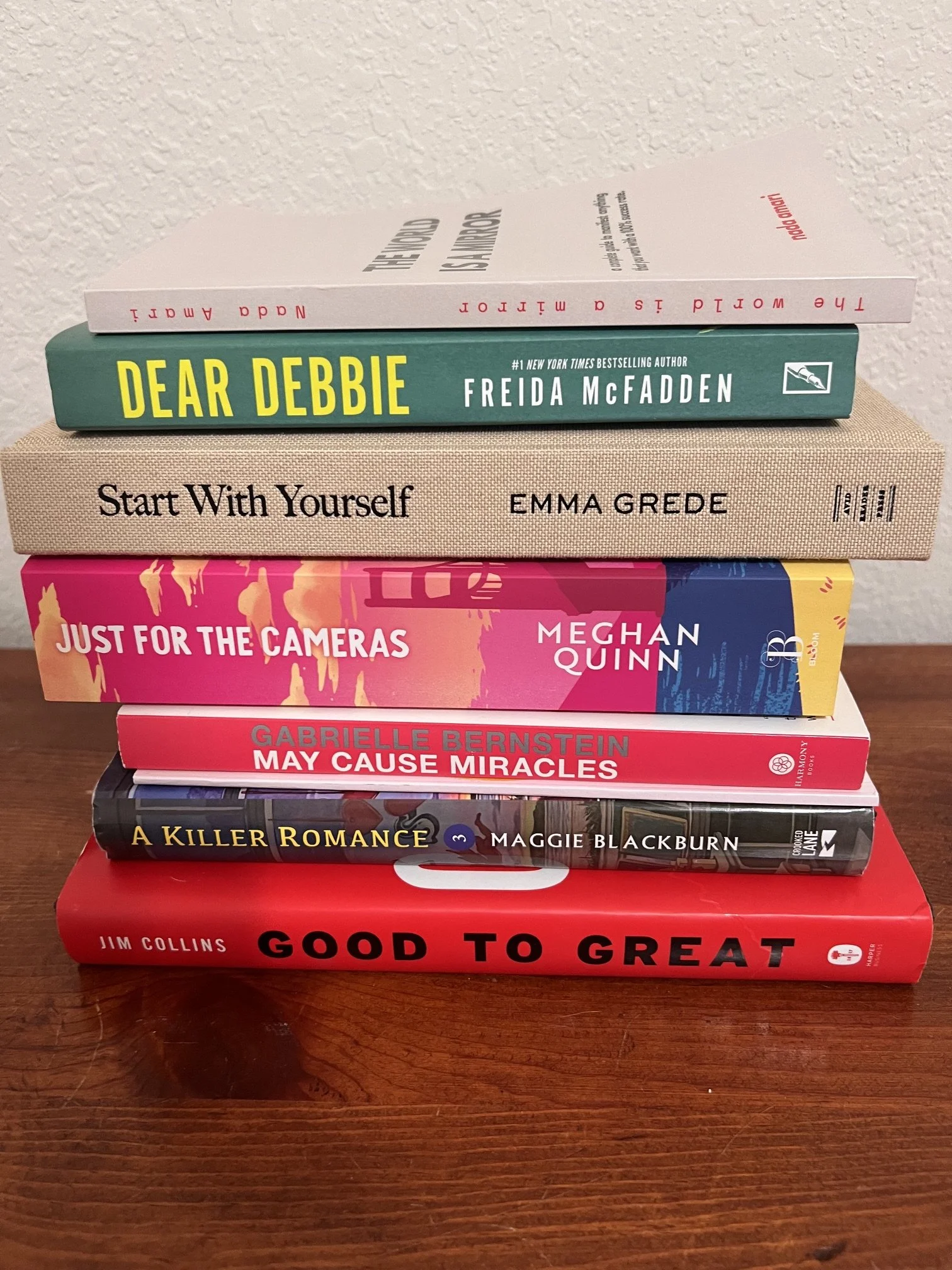
The Reading Stack
Here's everything that made it through my hands last month, in the order I actually read them:
The Ones That Passed the Time
Dear Debbie is a fast thriller, and it does exactly what a fast thriller is supposed to do. The pacing is tight, the twists land where they should, and I did not feel like it asked of me to sit with anything uncomfortable for longer than a page or two. If you pick this up on a night when your nervous system needed something absorbing but not demanding, it did its job. That's not a criticism. Sometimes a book's only assignment is to occupy the part of your brain that won't stop working, and this one handled that assignment well.
Just for the Cameras and A Killer Romance sit in the same category. Entertaining, well-paced, easy to put down without a second thought once I closed the last page. I feel like I finished both of them the way you finish a good episode of television: satisfied in the moment, not thinking about it twenty-four hours later. There's a place for that kind of reading, especially when you're already carrying a full mental load and don't need every hour of downtime to be productive or transformational.
Start With Yourself and Good to Great were my book club entries for the month, and they read exactly like what they are: well-researched, clearly structured, occasionally useful if you hadn't already absorbed similar frameworks elsewhere. Neither one told me anything that contradicted what I already knew about building something sustainable. If you're newer to business or leadership reading, either book is a reasonable entry point. If you've been in this world for a while, you likely recognized most of the frameworks before the chapter finished making its point.
May Cause Miracles was the one I almost didn't finish. Not because it was poorly written, but because it asked me to accept a framework I've learned to be skeptical of. Manifestation, universal energy, the idea that shifting my internal state alone shifts my external circumstances. If that language works for you, it works for you, and there's no need to apologize for that. But if you're the kind of reader who needs a mechanism, not just a belief, this book likely asked more of your faith than your attention. By this point in the year with everything I have been actively working on personally, I was tired of language that couldn't tell me why something worked, only that it did if I believed hard enough.
The One That Actually Landed
The World Is a Mirror was different from the first page, and it's worth slowing down on why.
The premise is simple and a little uncomfortable: the way people treat you, the way situations repeat themselves, the friction points you keep hitting in relationships or work or your own decision making, none of that is random. Amari's argument is that these patterns are often a reflection of something in you that hasn't been named yet, let alone dealt with. Not in a blame yourself way. Here is the actual mechanism way. I always do better when I have tactical steps on how to change things since it has been a journey of getting more into my emotional body.
That distinction matters more than it might sound like it does. A lot of personal growth writing tells you to look inward without ever telling you what you're supposed to be looking for. This book was specific. It didn't ask you to sit quietly and wait for insight to arrive. It gave you a method for identifying the exact moment a pattern started repeating, and then it asked you to take responsibility for your part in it, without spiraling into shame about having a part in it at all.
That's the difference between a book that entertains you for a weekend and one that changes how you read the next ten books you pick up. I finished this one and immediately started asking harder questions of everything else on the stack.
The Resonance Test
By the time I finished all seven books, there is way to identify with a rough framework for why six of them slid off me and one didn't. Call it the Resonance Test. It's three questions, and running a book through them before you're fifty pages in will save you a lot of reading time you don't actually have.
Does this book ask you to believe something, or does it ask you to notice something?
Content that asks you to believe in unseen forces, universal timing, or energy you can't verify tends to leave analytical readers cold, no matter how well it's written. Content that asks you to notice a pattern you can actually observe in your own life, your own relationships, your own decision making, tends to stick. Belief requires faith. Noticing only requires honesty.
Is the language specific enough to apply, or vague enough to just feel good?
"Trust the process" feels good and asks nothing of you. "Name the exact moment you started avoiding this conversation" is specific enough to actually use tonight. If you can't turn a chapter into a concrete action by the time you finish it, the chapter was likely filler dressed up as insight.
Would you recommend this to someone who is skeptical, or only to someone who already agrees with it?
This is the real test, and it's the one most personal growth books fail. A book that only works if the reader already believes the premise isn't doing much work. A book that can reach someone who walked in doubtful, the way The World Is a Mirror reached me, is doing something real.
Why This Matters Beyond June 2026
If you're someone who reads a lot of personal growth or self-help content and finishes most of it wondering why nothing actually changed afterward, the Resonance Test is worth building into your reading habit. It's not about reading less. It's about noticing earlier when a book is asking you to feel something instead of do something, and giving yourself permission to set it down before you've finished it out of obligation.
You don't owe every book on your nightstand a full read. You owe yourself an honest answer about whether it's actually landing, and the sooner you can tell the difference, the more of your limited reading time goes toward the one book a month that's actually worth it.
For me, my June reading was six books that passed the time and one that changed how I will choose the next stack. That's a good ratio, honestly. Most months, one real shift is worth more than seven pleasant hours combined.
If you want to start with the one that did something real, The World Is a Mirror is where to begin. The rest of the stack is linked above if you're curious, including Good to Greatfor a business read and Dear Debbie if you just want a fast, absorbing thriller for a night when your brain needs a break, not a lesson.