Vision Board Psychology: How to Build a Board That Actually Works When You Feel Emotionally Flat
There is a particular kind of exhaustion that does not come from doing too much.
It comes from feeling very little. If you feel like you are struggling in a season of emotional numbness or emotional flatness, I hope this post helps provide a tactical tip on how vision boards can help in this season of emotional flatness.
You wake up each morning, you do what needs to be done, you perform competently at work beautifully, and on paper your life may look stable or even successful. But underneath it, something feels muted. Not sad enough to call grief. Not broken enough to fix. Just flat. Emotionally neutral in a way that slowly drains color from everything else.
Many women arrive at vision boards during this season. They are told that if they cut out the right images, write the right affirmations, or visualize hard enough, the spark will return. Sometimes it does, briefly. Often it does not.You get frustrated and start asking yourself is there something wrong with me.
The problem is not that vision boards do not work. The problem is that most vision boards are built from the wrong psychological place.
This is not an article about manifesting a bigger house or a better job. It is about using vision boards as a neuro-emotional tool to restore desire, curiosity, and internal movement for women who feel emotionally flat and want to feel alive again.
Because passion does not come from forcing optimism. It comes from reconnecting with what your nervous system has quietly stopped expecting.
Emotional Flatness Is Not a Personal Failure
Before we talk about vision boards, we need to talk about emotional flatness itself.
Emotional flatness is not laziness, ingratitude, or lack of imagination. It is often a protective adaptation. Many high-functioning women arrive here after years of being responsible, resilient, and composed through experiences that required emotional containment. Divorce, long caregiving seasons of either children or loved ones, chronic stress, betrayal after betrayal, repeated disappointment. The list goes on and on; but at the end of the day, life needs to be kept living and moving forward. Living in survival mode while appearing perfectly fine and you feel numb on the inside.
When life has taught your nervous system that wanting too much leads to pain, disappointment, or instability, the system adapts. It lowers emotional volume. It keeps desire vague. It prioritizes predictability over excitement.
From the outside, this looks like stability. From the inside, it feels like being half awake.
This is why many women say things like, “I don’t know what I want anymore,” or “Nothing really excites me,” or “I should be happy, but I’m not feeling anything.”
A traditional vision board often fails here because it skips the emotional repair process and jumps straight to outcomes.
Your nervous system does not respond to outcomes when it no longer trusts longing. It responds to felt safety, permission, and resonance. So how do we tap into those feelings in our body when we spend most of our time in our heads pushing our emotions down to survive?
Why Most Vision Boards Do Not Work
The reason many vision boards fail is not lack of belief. It is a misalignment with how the brain and emotional system actually function. Most boards are built around external symbols of success without addressing internal readiness.
You see images of luxury, romance, freedom, or joy, but your body does not register them as accessible. Instead of inspiration, the images quietly reinforce distance. Honestly, it feels more of the same numbness that you have been experiencing for a long time.
Psychologically, this creates one of three responses:
Emotional numbness: The images feel irrelevant or unrealistic.
Subtle self-criticism: A quiet voice says, “Why don’t I have this yet?”
Temporary motivation followed by collapse: A short burst of excitement that fades because it was not integrated emotionally.
Vision boards fail when they are aspirational without being relational. The brain needs to recognize itself inside the future you are presenting.
If the future self feels foreign, unsafe, or emotionally unavailable, your nervous system will not move toward it which has taken me years for that to click.
This is not resistance. It is the self-protection that you are used to doing on autopilot and may not even be aware of that happening.
Vision Boards Work Through Emotional Encoding, Not Wishful Thinking
A vision board that works is not about convincing yourself something is possible.
It is about activating emotional memory pathways that remind your system what aliveness feels like. The brain does not prioritize goals. It prioritizes emotional relevance.
This is why emotionally flat women often struggle with goal-setting. It is not that they lack discipline. It is that goals without emotional charge do not register as meaningful. It is more just one more thing to accomplish but once you do, you don’t feel much of anything like pride or excitement you reached your goal.
A functioning vision board that will be successful in supporting you does three things psychologically:
It reconnects you to felt experience, not just ideas.
It creates emotional familiarity with states you want to inhabit again.
It lowers threat response by framing desire as safe and gradual.
This is subtle work. Quiet work. But it is deeply effective once that really clicks for you.
The Shift: From “What Do I Want?” to “What Do I Want to Feel Again?”
If emotional flatness is your starting point, the most important shift is this:
Do not begin your vision board by asking what you want to achieve. Begin by asking what you want to feel again.
Not hypothetically. Not ideally. Viscerally in your gut.
Many women struggle here because they have been disconnected from feeling for a long time. If that is you, start with memory rather than imagination or use the below questions to help get some thoughts flowing.
Ask yourself:
When was the last time I felt quietly alive?
When was the last time I felt curious?
When was the last time I felt relaxed without guilt?
When was the last time I felt desired, engaged, or internally spacious?
Your board is not about recreating those moments. It is about reminding your nervous system that they exist even if you haven’t felt those emotions in years.
Emotion precedes motivation. Always.
Building a Board for Emotional Reawakening
This is where vision boards shift from being decorative to being therapeutic. A board that actually works for emotional flatness is built slowly. Intentionally. Without pressure.
Here are the psychological principles that matter most.
1. Choose Images That Feel Familiar, Not Aspirational
The most powerful images are not the most impressive ones. They are the ones that cause a small internal response.
You are not looking for fireworks. You are looking for recognition. An image that makes you think, “I remember this feeling,” is infinitely more powerful than one that makes you think, “I wish.”
This could look like several different things:
A quiet café rather than a luxury vacation.
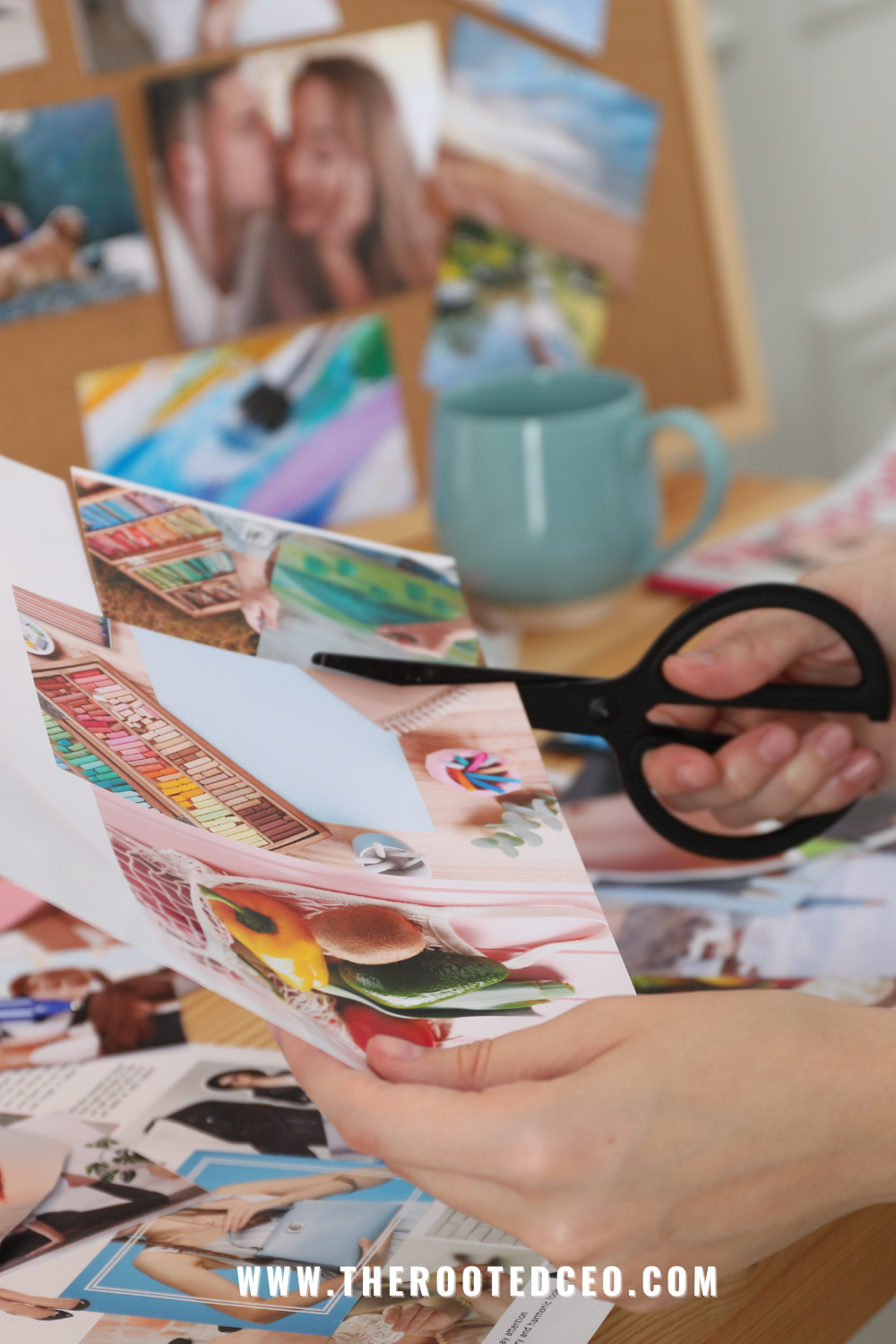
A woman laughing mid-conversation instead of a posed romantic scene. The image that I have on my 2026 vision board is a woman laughing into a kiss which you can see it below.
A body in motion rather than a perfected aesthetic.
A soft morning light instead of a dramatic transformation image.
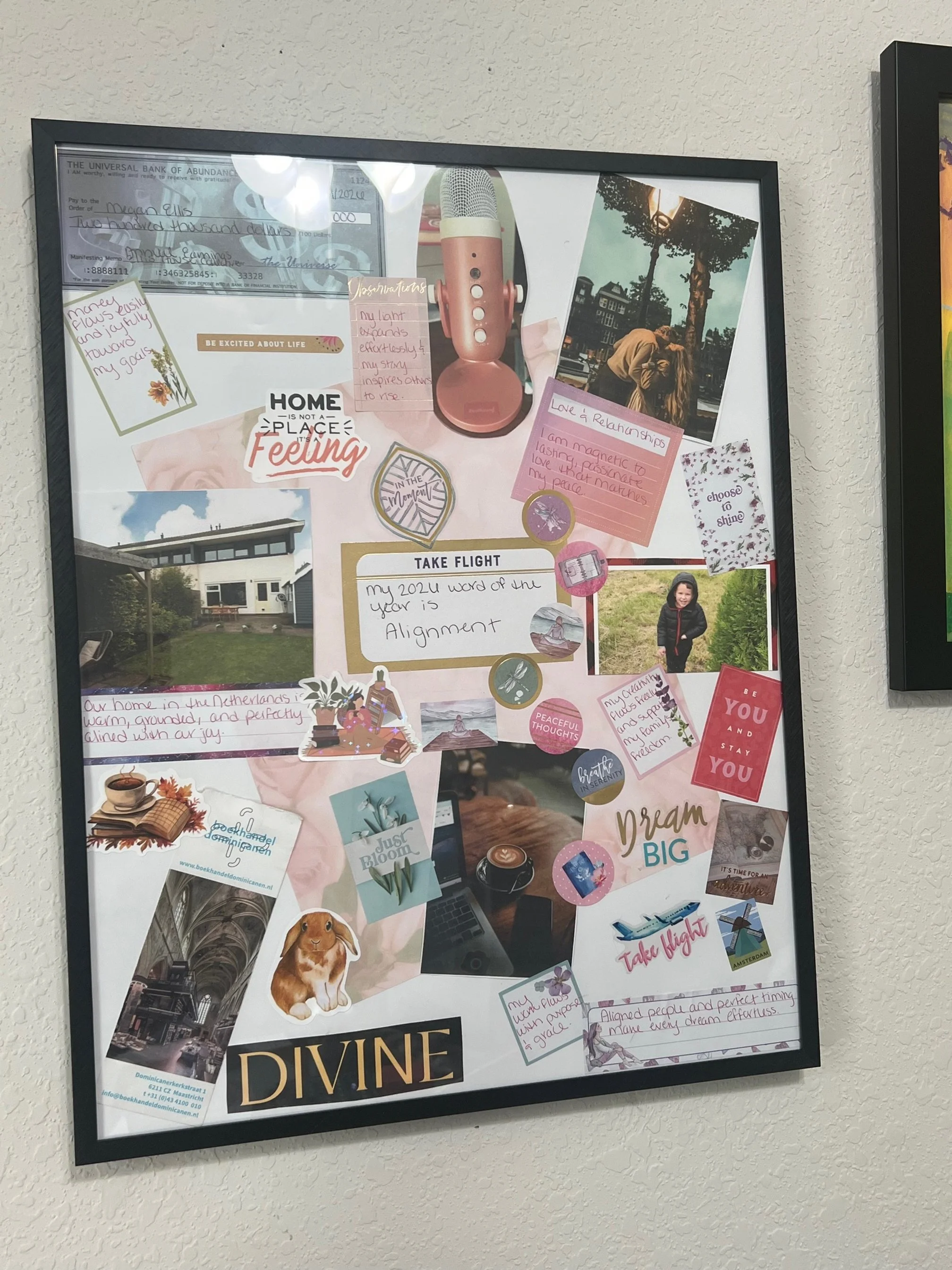
The nervous system moves toward familiarity before novelty. Your brain is looking for the path of least resistance that it has experienced before.
Familiarity does not always mean boring. It means emotionally legible.
2. Focus on States of Being, Not Roles
Many women build vision boards around roles they think they should want to embody like being a loving partner, CEO, a wild adventurer, a healer or someone’s muse.
Roles can be useful later. They are not helpful at the beginning of emotional reconnection. Start with states of being.
Images that convey:
Calm engagement
Soft confidence
Focused presence
Playful absorption
Grounded pleasure
These states create internal permission. Once your system remembers how to access them, roles naturally reorganize. One thing that helps this process work faster is supporting the subconscious mind while your conscious mind rests.
Vision boards work best when the identity behind them feels emotionally believable. If your nervous system still associates success, love, or freedom with pressure or exhaustion, your mind may quietly resist the vision you are trying to build.
Some women use subconscious audio designed to reinforce states like calm leadership, emotional openness, or abundance while they sleep. This kind of support can help the internal identity shift that makes vision boards more effective over time. If you want to reinforce the identity behind your vision, my Multi-Millionaire Mindset Subliminal was designed for analytical women building grounded success.
3. Include Sensory Cues That Speak to the Body
Emotional flatness lives in the body as much as the mind. This is why effective vision boards are sensory.
If you haven’t read The Body Keeps the Score, it dives into the research on how your body holds onto emotions and trauma even if the event happened years previously. It is a great read if this concept is new to you and how it shows up in everyday life.
Look for images that suggest:
Warmth
Texture
Movement
Rhythm
Breath
You want your body to feel something before your mind decides anything. If an image makes you exhale, linger, or soften, it belongs on your board.
Why Words Matter Less Than You Think
Many vision boards fail because they rely too heavily on affirmations. Affirmations are cognitive tools. Emotional flatness is not a cognitive problem.
If you include words, let them be descriptive, not prescriptive.
Instead of:
“I am passionate and fulfilled.”
Try:
“Ease.”
“Curiosity.”
“Warmth.”
“Presence.”
“Movement.”
These words do not demand belief. They invite sensation.
The Role of Permission in Reawakening Desire
One of the most overlooked psychological elements of vision boards is permission.
Many women are subconsciously afraid that wanting more will destabilize what they have worked hard to maintain.Your board must communicate safety.
This might mean including images that suggest:
Slow change rather than abrupt transformation
Integration rather than escape
Depth rather than intensity
Passion does not always arrive as excitement. Sometimes it arrives as relief.
How to Use Your Vision Board Without Turning It Into Pressure
A vision board does not work by staring at it every morning and demanding change. It works by being seen passively over time.
Place your board somewhere you naturally pass by. Let it be part of your environment, not a task.
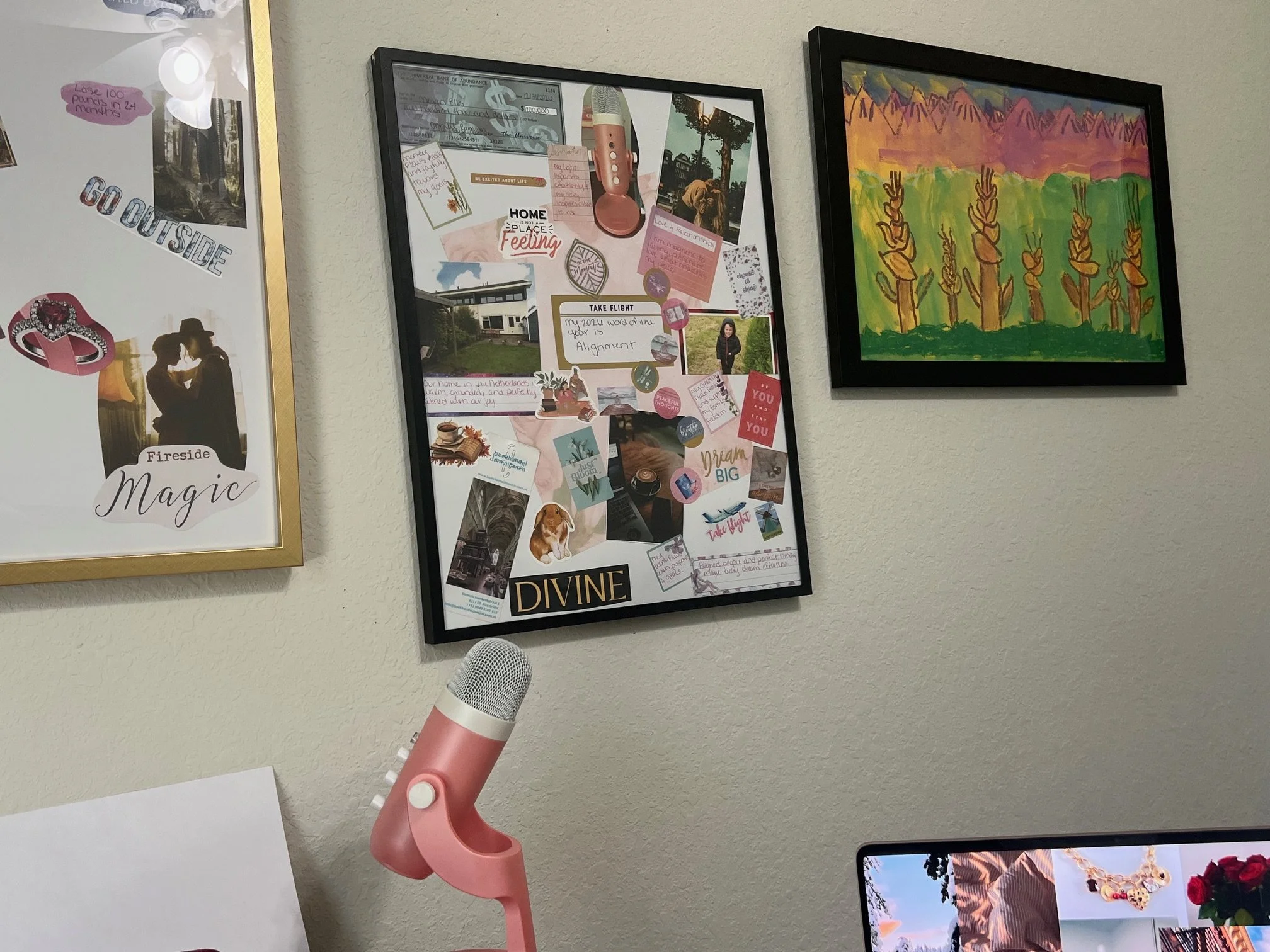
For example, I have my vision boards from the years put into picture frames to help make it look polished and those are all hung up in my home office. For the current year, I have that vision board hanging up where it is in my line of sight to see each day/time I am working from home. The goal is not activation. It is normalization.
Over time, your nervous system begins to register the emotional states represented as familiar and attainable.
Emotional Reawakening Is Incremental, Not Dramatic
This is important to say clearly. If you are emotionally flat, a working vision board will not suddenly make you euphoric. It will do something quieter.
You may notice:
You linger longer in conversations.
You feel mild interest instead of indifference.
You experience moments of softness without trying.
You feel less resistant to the idea of desire.
These are signs of success of the slow steps you are taking. Passion is rebuilt through small openings, not grand declarations.
Why This Matters for Love, Creativity, and Purpose
When emotional flatness lifts, even slightly, many areas of life begin to reorganize.
In love, you become more responsive rather than evaluative. In creativity, ideas arrive without force especially after long periods of feeling emotionally blocked. In purpose, direction feels less pressured.
This is not because you manifested outcomes. It is because you restored emotional availability. A vision board that works is one that helps you feel available to life again.
When to Update or Change Your Board
A board should evolve as your emotional range expands. You aren’t pigeon-holed into having just one for the entire year or until those things show up in your life.
You may notice that certain images no longer resonate. Remove them without judgment. You may feel drawn to slightly more dynamic or expressive images. Add them slowly.
The board is a living reflection of your internal state, not a static declaration.
A Quiet Practice to Pair With Your Board
Once or twice a week, take two minutes to sit with your board. Do not analyze it. Do not visualize outcomes.
Ask one simple question:
“What part of me feels awake when I look at this?”
That is all you need to do.
Final Reflection: Passion Returns Through Relationship, Not Force
Emotional flatness is not something to fix. It is something to listen to because it means that you are pouring too much into every other area of your life vs. you.
A vision board that actually works does not shout at you about who you should become. It sits quietly and reminds your nervous system of who you already are beneath the numbness.
When built with psychological care, a vision board becomes less about the future and more about re-establishing relationship with yourself.
From that place, passion returns naturally. Sometimes it will ebb and flow; but you will be aware of when it begins to.
Not as chaos. Not as urgency. But as a steady, grounded sense that life is moving again. And that you are allowed to move with it and that is okay.